Pain
Slipped Disc Ayurvedic Treatment
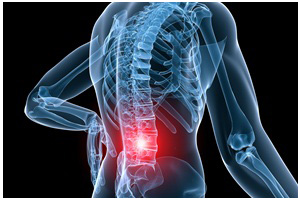 A spinal disc herniation (prolapsus disci intervertebralis), incorrectly called a "slipped disc", is a medical condition affecting the spine, in which a tear in the outer, fibrous ring (annulus fibrosus) of an intervertebral disc (discus intervertebralis) allows the soft, central portion (nucleus pulposus) to bulge out.
The popular term "slipped disc" is quite misleading, as an intervertebral disc, being tightly sandwiched between two vertebrae, cannot actually "slip," "slide," or even get "out of place." The disc is actually grown together with the adjacent vertebrae and can be squeezed, stretched, and twisted, all in small degrees.
- Cervical Disc Herniation
- Lumbar Disc Herniation
Disc herniations can occur from general wear and tear, such as jobs that require constant sitting, but especially jobs that require lifting. Traumatic (quick) injury to lumbar discs commonly occurs from lifting while bent at the waist, rather than lifting while using the legs with a straightened back.
Herniation of the contents of the disc into the spinal canal often occurs when the front side (stomach side) of the disc is compressed while sitting or bending forward, and the contents (nucleus pulposus) get pressed against the tightly stretched and thinned membrane (annulus fibrosis) on the rear (back side) of the disc.
Symptoms - Slipped Disc
Symptoms of a herniated disc can vary depending on the location of the herniation and the types of soft tissue that become involved. They can range from little or no pain if the disc is the only tissue injured, to severe and unrelenting neck or low back pain that will radiate into the regions served by affected nerve roots that are irritated or impinged by the herniated material. Other symptoms may include sensory changes such as numbness, tingling, muscular weakness, paralysis, paresthesia, and affection of reflexes. If the herniated disc is in the lumbar region the patient may also experience sciatica due to irritation of the sciatic nerve. Unlike a pulsating pain or pain that comes and goes, which can be caused by muscle spasm, pain from a herniated disc is usually continuous.
Physicians treats slipped disc conditions with age old ayurvedic treatments. Ayurvedic doctors of Ayusya Herbal Clinic generally diagnose using Sanskrit medical texts. Severe back pain in Ayurveda is called Kadeegraham (Lumbago). Slip Disc is a very serious medical condition which comes under this group of aliments called Kadeegrahom. In ayurveda it can be called Sandhivislesham or Asthi Chyudi (Sanskrit words for Slip Disc or Herniated Disc)
1. Setting the bone alignment.
The herniated disc can be restored into its orginal position. Ayusya herbal clinic has its own traditional Ayurvedic techniques for setting the bone alignment.
2. Healing procedure for the restored disc.
3. Strengthening the affected area both the disc and also wholistically causing complete rejuventation for the whole spine.
4. Meditation and Medication for two to three months while orally taking traditional Ayurvedic herbal medicines.
If you have this disorder, don’t think twice come to our clinic and visit our doctors and for a permanent side effect free treatment through proper ayurvedic medications and lifestyle management so do contact us.